

BE A PART OF IT

Find Your Place in the Kitchen

Whether you’re co-producing, providing a kitchen, building a local group, or contributing raw ingredients – in the Kaláka network, there’s a meaningful role for everyone.

In the Kaláka network, roles are fluid. You might be a Participant today and a Host tomorrow. Discover the different ways to contribute.

Join in, cook together, and stock up well.

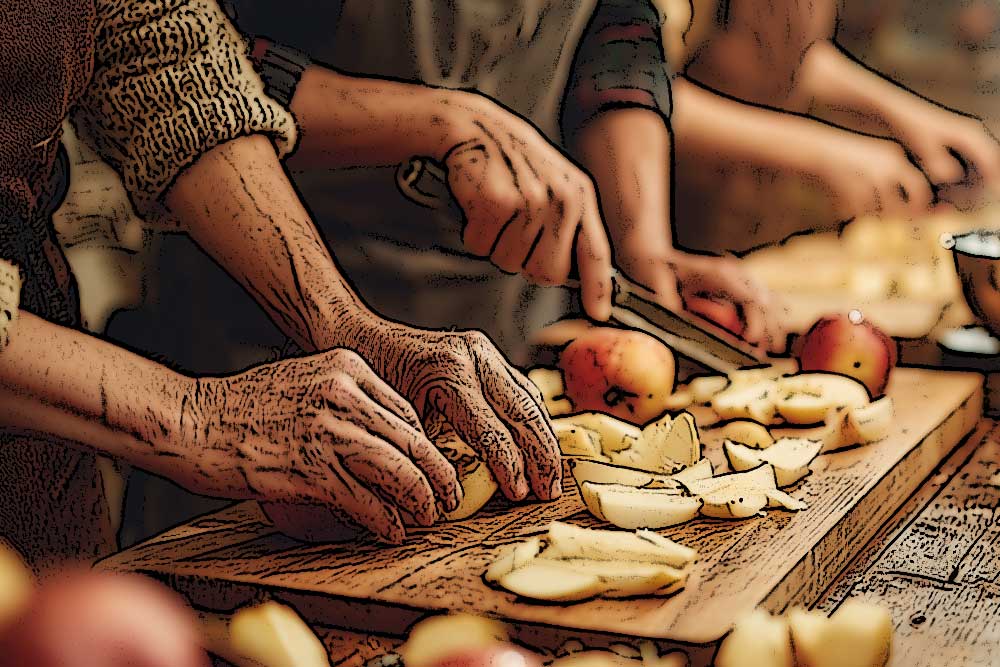
No professional skills required. Whether washing, peeling, cutting, or stirring – every pair of hands helps. You invest your time and contribute to the actual production costs. Together, we create high-quality food for today, the coming days, and for storage – and you know exactly what’s in it.

No prior experience needed

Only actual costs

Connect with your community

Your kitchen, our effort.

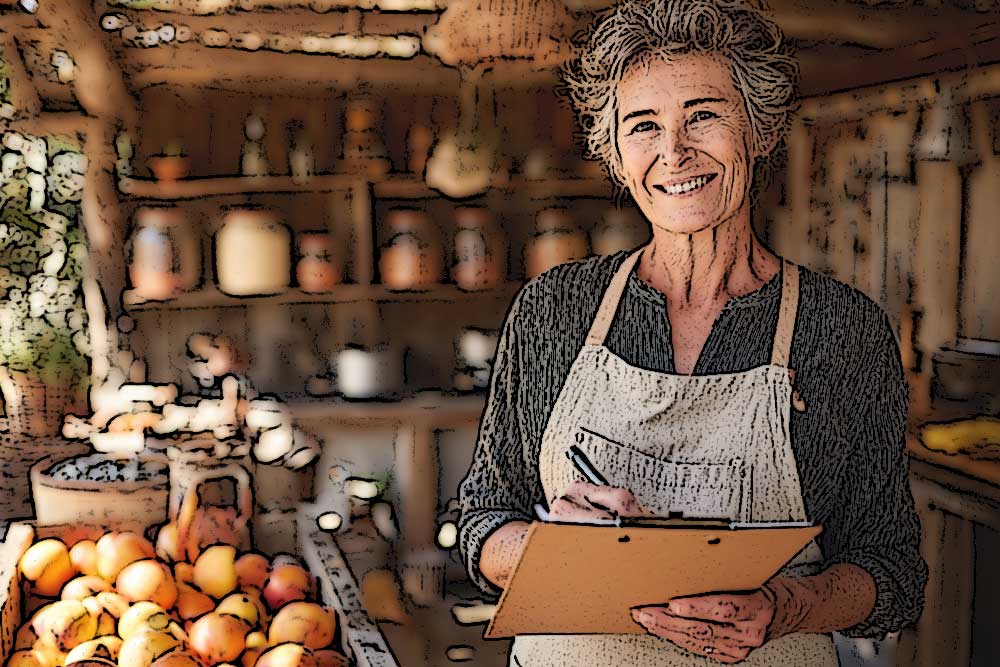
Do you have a spacious kitchen or a suitable outdoor cooking area? As a host, you provide the venue for a production day and, together with the team, keep an eye on ingredients, hygiene, and workflow. You make sure everything is prepared and the Kaláka flow is on track.

Lead the session

Oversee hygiene & workflow

Provide venue & equipment

The Heart of the local Group.

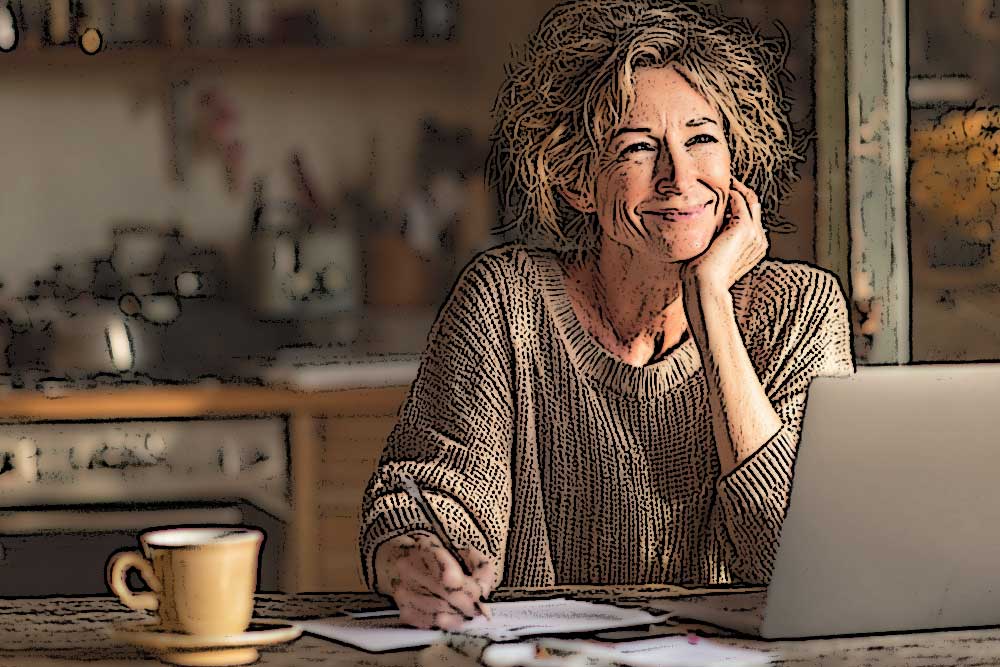
Become a “Spájz-Master.” You build the local hub, coordinate people and productions, and manage inventory and finances through the Kaláka platform. You are the most important link between your group and the network.

Launch a new hub

Manage group & inventory

Full admin & tech support

Fair Value for Your Harvest.

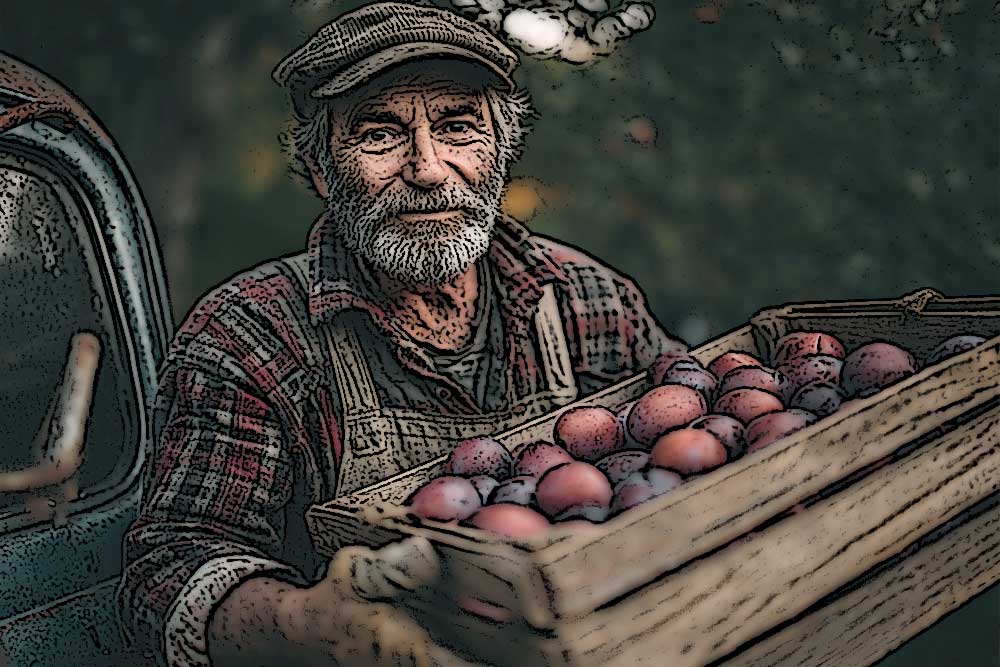
Are you a farmer or gardener with larger quantities or surplus harvest? Local Kaláka groups can source raw ingredients directly from you. Or you can become a member yourself and process your harvest together with the group into high-quality food products.

Bulk quantities welcome

Process harvest together

Direct local partnership

How Kaláka works

From signing up to taking your own food home – in practical terms.

  1. 1

    Anna signs up

    She becomes a member of her regional Kaláka group and can see which production days are planned.

  2. 2

    She finds a suitable production day

    On Saturday, the group is baking bread together. Anna can see the date, location, which products will be made that day, and that there is still a free place for someone to help.

  3. 3

    Anna joins the production day

    She signs up to take part. The quantities needed by the group as a whole are collected separately from all members, regardless of who is helping on that particular day.

  4. 4

    Everyone works together

    Anna helps for about four hours – for example with weighing, shaping, baking or cleaning. No previous experience is required.

  5. 5

    The production is documented

    The ingredients used, the actual costs and the quantities produced are recorded.

  6. 6

    The actual costs are settled

    Production costs are allocated among the members and settled through the internal balance account. Members fund this account in advance so that ingredients and other costs can be paid on time. There is no profit markup.

  7. 7

    Anna takes her share home

    At the end, she receives the amount of the jointly produced bread allocated to her.

That is Kaláka: planning together, working together, sharing the actual costs and taking home food produced together.

One production day – three time horizons

When people, raw ingredients, and a well-equipped kitchen come together, we make the most of the day. From a larger quantity of vegetables, for example, a shared meal, fresh pasta, or spreads for the coming days, as well as preserved sauces for storage, can all be created at the same time. This is how Kaláka produces for today, for the coming days, and for later.

For today

  • Shared meal
  • fresh pasta
  • desserts

For the coming days

  • Bread
  • Spreads
  • soups
  • prepared meals

For storage

  • Cookies
  • preserved goods
  • ferments
  • shelf-stable sauces

How fair exchange works

Your time

Shared work is part of Kaláka. Your working time is not a separate currency, but your active contribution to the community.

The costs

You only pay the actual production costs – for raw ingredients, energy, and packaging. No markup and no hidden fees.

The food

Even before production begins, it is clear what will be made and how costs and produced quantities will be allocated within the group.

Organized by "Regio" – Powered by You.

Kaláka-Konyha is more than a digital platform; it is a supportive network. We are establishing “Regio” – a non-profit association designed to provide a legal umbrella for all local hubs. While every group acts autonomously, the Association ensures we all play by the same fair rules. We provide the regulatory framework so you can focus on what matters: the food.

The Promise

Safety, Fairness & Transparency

Strict Hygiene

Professional safety guidelines based on industry standards, specifically adapted for private kitchens.

Legal Security

We turn private gatherings into protected association events, providing a secure legal structure for hosts and members.

Transparent Costs

You only bear the actual production costs. There are no profit margins and no hidden fees.

Proven Knowledge

Access to professionally tested, scalable recipes and processes that guarantee safe and delicious results every time.

Start your own Kaláka

You do not have to figure everything out on your own. If you want to build a regional Kaláka group, you first learn the system where it is already working in practice.

As a future Spájz-Master, you take part in at least three production days with an existing Kaláka group. This gives you hands-on experience with the complete process – from organization and hygiene to inventory, documentation, costs and the interaction between the different roles.

After that, you can build your own regional group with the support of the Kaláka network.

A local group does not need to start big. 2–8 interested people, a suitable location and one manageable first production are enough to get started.
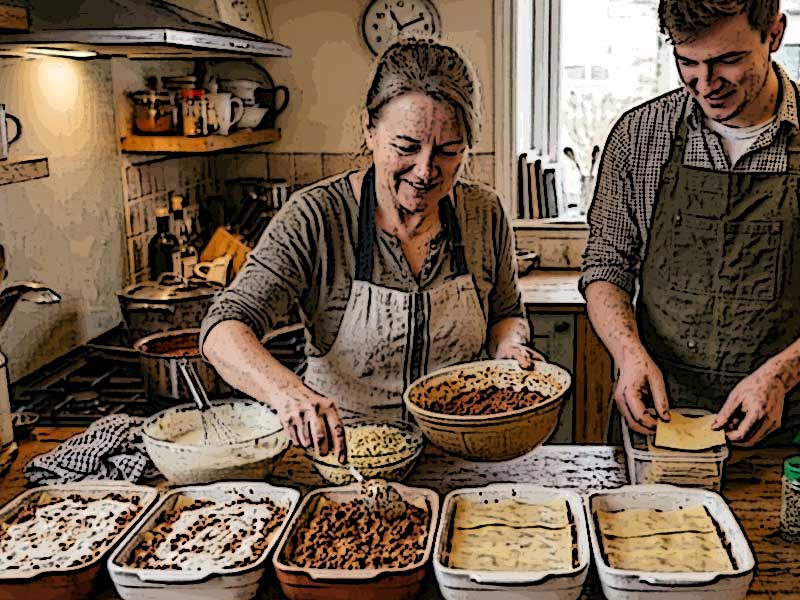
Shared lasagne production in a Kaláka group

5 steps to your own hub

  1. 1
    Get to know an existing KalákaTake part in at least three production days and learn the different workflows through hands-on experience.
  2. 2
    Become a Spájz-MasterYou receive the knowledge and tools you need to organize and operate your own group.
  3. 3
    Bring together 2–8 interested peopleFind people in your region who want to process food together and build a local Kaláka group.
  4. 4
    Arrange the location and equipmentA private kitchen, a suitable outdoor cooking area or another appropriate production space can be your starting point.
  5. 5
    Start togetherPlan the first production day with your new group, run it using the Kaláka tools and develop your hub step by step from there.

What Kaláka provides

  • scalable recipes and proven processes
  • hygiene and food-safety knowledge
  • hands-on onboarding in an existing group
  • digital production planning
  • inventory and cost management
  • batch and label management
  • Academy and training materials
  • admin and technical support
  • exchange of experience with other Spájz-Masters

No group in your village yet?

Don’t wait. Be the spark. Starting a group is easier than you think – we provide the tools, the rules, and the recipes.

Ask Us

Frequently Asked Questions

Everything you need to know before your first cooking day.

Still have questions?

Find details on cancellations, bringing children, hygiene rules, and legal topics in our full knowledge base.

I’m not a great cook – are there tasks for "unskilled hands"?

Absolutely! A Kaláka only works through division of labor. We need hands for washing, peeling, chopping, washing jars, writing labels, or simply for stirring. You will see: You learn most of it automatically by doing.

Yes, that is part of our concept. Our groups often consist of locals and newcomers. The recipes are available in three languages (HU/DE/EN). Hands and feet help with the rest – doing things together connects people faster than any language course.

To be legally secure, you become a member of the association. There is a small annual fee to cover basic administration. However, costs for food only arise if you want to take some of the jointly produced goods (e.g., bread or jam). It is not decisive whether you were there on the specific production day or helped at another time: Through the raw material levy, you receive as much goods as you have financially contributed.

Because it creates much more than just the finished food. People who take part regularly learn, through practical experience, how food is made, how to assess ingredients and how to adapt recipes to their own needs. This knowledge builds confidence and independence in the kitchen. At the same time, it becomes easier to cook a varied diet with fresh ingredients and rely less on highly processed convenience foods. That is why learning together is a core part of Kaláka.

Because we do not want a community made up of helpers on one side and passive recipients on the other. At Kaláka, everyone takes an active part in production and meets others as an equal – regardless of age, background, income or previous experience. While cutting, cooking, baking and cleaning up, conversations and relationships develop naturally. That is why Kaláka is deliberately designed so that food is not simply distributed, but produced together.

Yes. Each group posts its activities (e.g., “Saturday: Bread Baking” or “Tuesday: Preserving”). You only sign up bindingly for the dates that fit into your calendar.